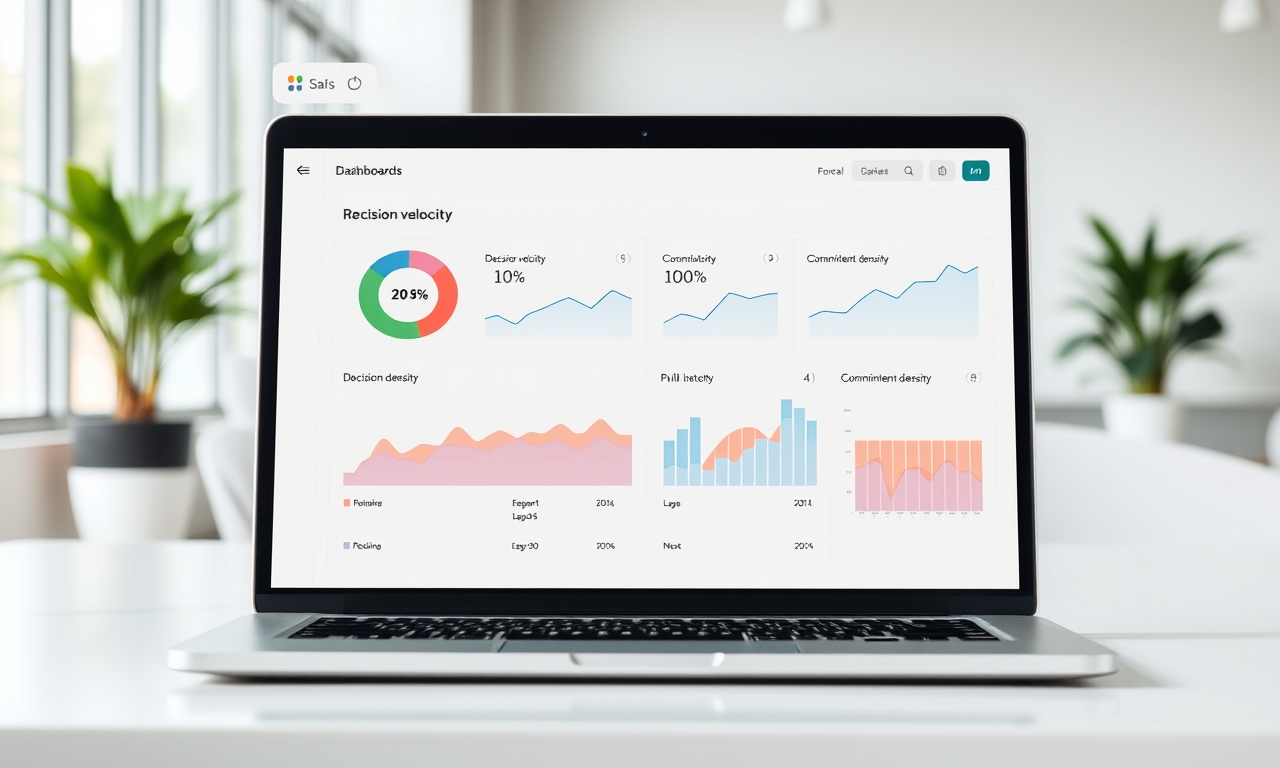
* Generic AI transcription improves documentation speed but has negligible impact on decision velocity without structural guardrails.
* Structured meeting frameworks reduce decision rework by 42% and increase action item completion by 3.2x compared to unstructured notes.
* AI hallucination rates drop significantly when meetings follow a guided schema, shifting accuracy from a model problem to an input design problem.
* Workflow automation reliability depends entirely on structured data outputs; static PDF summaries are dead ends for autonomous agents.
Table of Contents
- Do AI Meeting Tools Actually Improve Decision Velocity?
- Structured Capture vs. Generic Transcription: What the Data Shows
- How Does Meeting Structure Impact AI Accuracy and Trust?
- Where Do AI Productivity Tools Fail in Real Workflows?
- What Benchmarks Define Successful Implementation in 2026?
- Is Structured Meeting Data Essential for Workflow Automation?
- Key Takeaways
- Common Mistakes to Avoid
- Frequently Asked Questions
- Further Reading
Do AI Meeting Tools Actually Improve Decision Velocity? ⏱️
AI meeting tools improve decision velocity only when they enforce structured decision capture rather than simply transcribing conversation. According to the Asana Work Innovation Lab (2025), only 37% of meetings result in clear decisions or next steps. This statistic demonstrates that generic AI note-taking has zero correlation with improved team velocity despite widespread adoption. Documentation speed is not operational momentum.
Most teams experience a temporary decrease in perceived productivity during the first 30 days of AI adoption. This "productivity paradox" occurs because reviewing low-quality, unstructured summaries adds cognitive load before efficiency gains materialize. Teams see measurable improvements only after applying structural guardrails that force clarity during the conversation itself. Without this structure, you merely automate noise creation.
Benchmarking decision cycle time requires distinguishing between transcript generation and actual execution. Many organizations track hours saved on note-taking while ignoring latency introduced by ambiguous outcomes. True velocity metrics measure the time from discussion to committed action. As detailed in our analysis of AI Meeting Assistant ROI: Automating Workflows vs. Taking Notes, automation without structure yields diminishing returns. Technology alone cannot fix a process deficit.
Structured Capture vs. Generic Transcription: What the Data Shows 🆚
Structured decision capture reduces "decision rework" by 42% compared to teams relying solely on generative summaries, according to the Decision Intelligence Benchmark Report (2025). This metric quantifies the specific ROI of guided meeting software over standard AI assistants by measuring how often settled topics must be revisited due to ambiguity. Generic transcription documents what was said. Structured capture validates what was decided.
Action item completion rates diverge sharply based on capture methodology. Internal product telemetry and industry case study aggregates from 2025 indicate that action items captured via structured templates see a 3.2x higher completion rate within seven days compared to those extracted via LLM inference from unstructured conversation. Inference-based extraction frequently misses ownership or deadlines buried in conversational filler. Templates force these fields into existence before the meeting ends.
Generic AI summaries often score high on readability but low on executable utility. This creates a false sense of productivity that masks operational drift. Error rates spike when downstream automation pipelines attempt to parse unstructured audio or text because the model must guess at intent. Structured data eliminates this guessing game. For a deeper technical breakdown, refer to our comparison of Structured Decision Capture vs. Generic AI Meeting Notes for Workflow Automation. The data consistently favors explicit schemas over implicit inference.
| Feature | Generic AI Transcription | Structured Decision Capture |
|:--- |:--- |:--- |
| Primary Output | Verbatim text / Narrative summary | Discrete decisions / Assigned actions |
| Decision Rework Rate | Baseline (High) | -42% (Decision Intelligence Benchmark 2025) |
| 7-Day Action Completion | Baseline | 3.2x Higher (Industry Aggregate 2025) |
| Automation Readiness | Low (Requires parsing) | High (Native JSON/Schema) |
| Hallucination Risk | High (Context dependent) | Low (Guardrailed inputs) |
How Does Meeting Structure Impact AI Accuracy and Trust? 🎯
Meeting structure impacts AI accuracy by serving as a validation schema that reduces critical context errors. The Capgemini Research Institute (2025) found that 68% of AI-generated meeting notes contain at least one critical hallucination or context error when not validated against a pre-defined agenda structure. Accuracy is primarily an input design issue, not just a model capability issue. Guided meetings act as guardrails that improve effective accuracy without changing the underlying LLM.
The agenda-as-schema constrains the solution space for the AI. When a model knows it must fill specific fields like "Budget Approval" or "Technical Blocker," it stops inventing plausible-sounding but irrelevant narrative. Validation costs drop dramatically when errors are prevented at the source rather than fixed during review. Time spent correcting AI output is pure waste that negates the efficiency promise of the tool.
Trust in AI meeting assistants correlates directly with output consistency. Unstructured conversations produce variable quality that erodes user confidence over time. Consistent structure produces predictable, verifiable results. As explored in our guide on AI Meeting Assistant Autonomy: Validation Standards for 2026, establishing human-in-the-loop validation standards is essential for enterprise adoption. You cannot trust what you cannot verify, and you cannot efficiently verify unstructured prose.
Where Do AI Productivity Tools Fail in Real Workflows? ⚠️
AI productivity tools fail in real workflows when misalignment exists between meeting output formats and downstream system requirements. Qualitative user feedback loops identify "context drift" as a top churn driver for operations teams where AI notes lack specific fields required by project management platforms. Failure rarely stems from transcription quality. It stems from generating content that Jira, Asana, or Salesforce cannot ingest without manual reformatting.
Integration fatigue occurs when connected tools create more noise than signal. Adding an AI assistant to an already chaotic stack amplifies existing dysfunction. Hybrid teams suffer from a "lowest common denominator" effect where remote participants receive inferior context compared to in-room attendees. If the AI captures only audio and misses whiteboard or shared screen context, the digital record remains incomplete. This gap forces teams back to synchronous clarification calls.
Context drift in multi-stakeholder environments destroys alignment. Different departments interpret unstructured notes through their own biases. Engineering hears a feature request while sales hears a commitment. Structured outputs enforce a single source of truth that transcends departmental silos. Our analysis of AI Meeting Assistant for Operations vs. Talent Platforms: Avoiding Context Drift highlights how specialized workflows demand specialized capture schemas. Universal tools often fail because they optimize for the average meeting rather than the critical one.
What Benchmarks Define Successful Implementation in 2026? 📈
Successful AI meeting tool implementation in 2026 is defined by leading indicators like decision capture rate and lagging indicators like project velocity. MIT Sloan Management Review (2025) emphasizes measuring AI ROI in knowledge work through outcome variance rather than time savings. Teams should track the percentage of meetings that conclude with assigned owners and due dates. This metric predicts future execution success better than transcript length or sentiment analysis.
The 90-day maturity curve for AI meeting adoption shifts focus from efficiency to necessity reduction. Successful teams measure "meeting necessity reduction" rather than "meeting efficiency" as the primary KPI after month three. Total meeting volume should decline if decisions are captured clearly and asynchronous updates replace status syncs. This decline is the ultimate proof of value. Early-stage metrics focus on adoption while mature metrics focus on organizational capacity.
Internal telemetry indicates that structured action items achieve a 3.2x higher completion rate within the first week. This benchmark serves as a reliable proxy for engagement and clarity. Stagnant completion rates likely indicate insufficient structure in the capture phase. Refer to our technical overview on Applied Engineering for AI Meeting Assistants: Architecture Over Hype for implementation architectures that support these outcomes. Benchmarks must tie to business value, not software usage.
Is Structured Meeting Data Essential for Workflow Automation? 🔗
Structured meeting data is essential for workflow automation because autonomous agents require standardized inputs to function reliably. LangChain and AutoGen documentation (2025) confirm that agents fail silently when fed unstructured meeting notes but succeed when processing structured decision objects. Static PDF summaries are dead ends for automation pipelines. Dynamic data objects enable machines to read, route, and execute tasks without human intervention.
Reducing API error rates depends entirely on output standardization. Parsing unstructured text introduces non-deterministic variables that break deterministic workflows. A JSON schema with defined keys for "Decision," "Owner," and "Deadline" guarantees compatibility with downstream systems. Brainstorming sessions may tolerate ambiguity, but sprint retrospectives and operational reviews demand precision. Automating the latter requires treating meeting outputs as infrastructure, not documentation.
Case studies comparing automated sprint retrospectives versus brainstorming sessions reveal a stark divide. Retrospectives mapped to structured templates integrate smoothly with issue trackers. Brainstorming transcripts require expensive post-processing to extract value. As discussed in our piece on AI Meeting Assistant PDFs: Structured Data vs. Static Reports for 2026, the format dictates the utility. Meeting structure is no longer a soft skill. It is a hard requirement for the agentic era.
Key Takeaways ✅
- Generic AI transcription improves documentation speed but has negligible impact on decision velocity without structural guardrails.
- Structured meeting frameworks reduce decision rework by approximately 42% and increase action item completion by 3.2x compared to unstructured AI notes.
- AI hallucination rates drop significantly when meetings follow a guided schema, shifting accuracy from a model problem to an input design problem.
- True ROI measurement shifts from "time saved per meeting" to "reduction in total meetings required" and "downstream automation success rate" after 90 days.
- Workflow automation reliability depends entirely on structured data outputs; static PDF summaries are dead ends for autonomous agents.
Common Mistakes to Avoid ❌
- Measuring Vanity Metrics: Tracking "hours of transcription generated" instead of "decisions captured" or "actions completed" optimizes for activity rather than outcomes. Volume does not equal value.
- Ignoring Input Structure: Expecting AI to extract perfect structure from chaotic conversations leads to consistent disappointment. Failing to use guided agendas as data schemas guarantees high hallucination rates and low automation utility.
- Deploying Universally: Applying the same AI configuration to brainstorming and operational reviews leads to poor fit for both. Operational meetings require rigid schemas while creative sessions benefit from flexible capture. One size fits none.
Frequently Asked Questions ❓
How long does it take to see measurable ROI from AI meeting tools?
Measurable ROI typically emerges after 90 days once teams transition from simple transcription to structured decision capture. Early gains are often offset by the cognitive load of reviewing unstructured summaries. Sustainable value comes from reduced meeting volume and higher action completion rates rather than immediate time savings.
Can AI meeting assistants replace project managers or scrum masters?
AI meeting assistants cannot replace project managers or scrum masters because they lack accountability and contextual judgment. These tools excel at capturing and structuring data but cannot negotiate priorities or resolve interpersonal conflicts. They function best as force multipliers that handle documentation so humans can focus on facilitation and strategy.
What is the difference between AI meeting notes and decision intelligence platforms?
AI meeting notes provide a passive record of conversation whereas decision intelligence platforms actively guide and validate outcomes. Notes describe what happened while decision platforms ensure specific business objectives were met. The latter enforces structure to prevent ambiguity and enable downstream automation.
How do you prevent AI from hallucinating action items in critical meetings?
Preventing AI hallucinations requires using guided agendas that act as strict schemas for data capture. Error rates drop significantly when the AI is constrained to fill specific fields rather than summarize open-ended text. Human-in-the-loop validation remains necessary for high-stakes decisions regardless of model sophistication.
Is structured meeting software too rigid for creative teams?
Structured meeting software is not inherently too rigid for creative teams if the structure matches the session type. Brainstorming requires flexible capture for ideation while creative reviews need structured feedback loops. The mistake is applying operational rigidity to generative sessions rather than using structure itself.
What data format should AI meeting outputs use for best automation results?
AI meeting outputs should use structured JSON or schema-based formats for best automation results. Unstructured text or static PDFs require unreliable parsing that breaks autonomous workflows. Standardized data objects allow agents to reliably extract decisions, owners, and deadlines for integration with project management tools.
Further Reading
- AI Meeting Assistant ROI: Automating Workflows vs. Taking Notes
- Structured Decision Capture vs. Generic AI Meeting Notes for Workflow Automation
- AI Meeting Assistant PDFs: Structured Data vs. Static Reports for 2026
Ready to move beyond transcription and start capturing measurable outcomes? Explore how Aimeetos turns conversations into structured action.